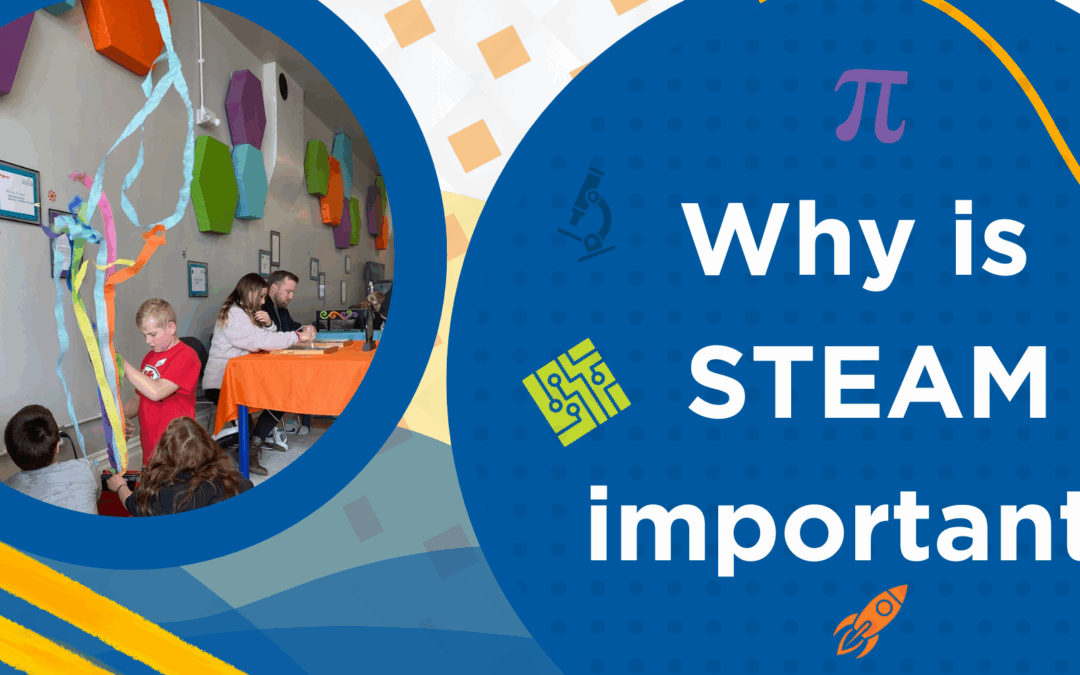
Hands-on STEAM learning—Science, Technology, Engineering, Arts, and Mathematics—has become essential in preparing students for the modern world. It equips learners with critical thinking, creativity, and problem-solving skills that are vital for success in today’s rapidly changing job market. Unlike traditional learning, STEAM emphasizes hands-on learning and interdisciplinary connections, helping students apply knowledge in real-world situations.
One of the main reasons STEAM education is so important is its connection to career opportunities. According to the U.S. Bureau of Labor Statistics, STEAM occupations are projected to grow by 10.8% between 2022 and 2032, compared to just 2.3% growth for non-STEAM jobs. Additionally, workers in STEAM fields earn significantly more, with a median annual wage of $97,980 in 2023, over double the overall median wage of $46,310. These numbers clearly show that STEAM skills open doors to higher-paying and fast-growing careers.
Beyond career preparation, STEAM education also improves student learning outcomes. Research has shown that students who participate in project-based STEAM learning score 8% higher on standardized tests than those in traditional classrooms. When the Arts are included, students develop creativity and communication skills, making them stronger innovators. In fact, studies show that students involved in the arts are four times more likely to be recognized for academic achievement than those who are not.
On a larger scale, STEAM education drives innovation and strengthens economies. The World Economic Forum reports that 65% of children entering primary school today will work in jobs that do not yet exist, many of which will require STEAM skills. Nations with higher rates of STEAM graduates often experience faster GDP growth, showing how STEAM education contributes to global competitiveness. By investing in STEAM, countries build stronger workforces prepared for future challenges.
Finally, STEAM education plays a key role in promoting equity and opportunity. Currently, women hold only 35% of STEM jobs in the U.S., and underrepresented minorities face even greater barriers. By introducing STEAM early, schools can inspire more diverse students to pursue these fields. In fact, 78% of high school students interested in STEM had hands-on learning opportunities before middle school. Expanding access to STEAM helps close opportunity gaps and prepares all students for success.
STEAM education is vital because it prepares students for high-demand careers, improves learning outcomes, strengthens economies, and promotes equity. The statistics highlight how STEAM creates pathways to success not just for individuals but for entire communities. As technology and innovation continue to reshape our world, investing in STEAM education is one of the most powerful ways to build a brighter future.